HVAC Maintenance in Cedar Park That Catches Problems Before Summer
- Spring AC tune ups
- Autumn heating checks
- Free quotes on repairs
- We cover your ZIP code
- We cover your ZIP code
- Price quoted before work starts
A measured tune up
Coil, capacitor, refrigerant, drain line and airflow.
Spring and autumn visits
AC in March or April, heating in October or November.
Price of the visit first
Ask before you book. Repairs get a free quote.
Filter and pollen tips
What you can check yourself each month.
What AC maintenance covers
What a proper AC tune up checks
The outdoor coil
The capacitor and contactor
Refrigerant pressures
The condensate line and pan
Airflow
Electrical connections and motors
The thermostat

- Coil fins
- Fan and motor
- Capacitor and contactor
- Refrigerant lines and insulation
- Level pad
- Disconnect and wiring
When to book: spring for the AC, autumn for the heater
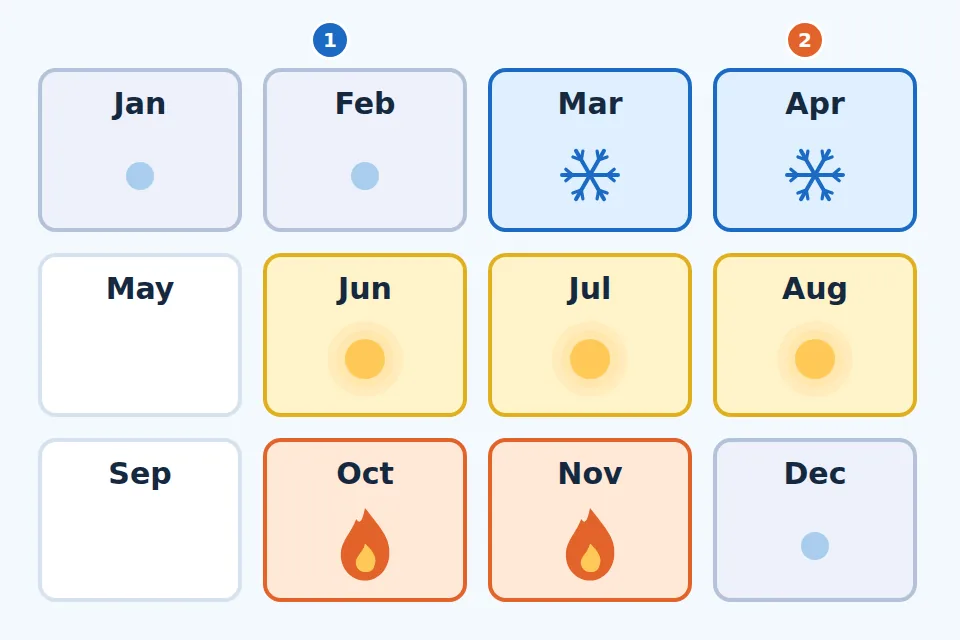
- Spring AC tune up in March and April
- Autumn heating check in October and November
Filters, cedar pollen and what you can do yourself
- ✓Check the filter every month. Cedar season from December to February and the spring pollen both fill filters fast. Change it when it looks grey, which is usually every one to three months.
- ✓Do not buy the densest filter on the shelf. Very high rated filters can restrict airflow on some systems and cause the coil to freeze. A mid range pleated filter is fine for most houses.
- ✓Keep the outdoor unit clear. Leave about two feet around it. Pull weeds and rinse the coil gently with a hose from the outside, with the power off.
- ✓Look at the drain line. If you see water in the pan under the indoor unit, call before it overflows.
Maintenance plans: what to ask before you sign
What maintenance does not do

Book a tune up before the heat starts
Questions about AC maintenance in Cedar Park
How often should I service my AC in Central Texas?
Once a year for an AC, in spring. Add a heating check in the autumn if you have a furnace. A heat pump should have both.
How long does an AC unit last in Texas heat?
Often 10 to 15 years. Units that run flat out and never get serviced fail sooner, and a well kept one can pass 15.
What does an AC tune up cost in Cedar Park?
Prices differ between companies, so ask when you book. A fair company can quote the price on the phone and tell you what is on the checklist.
Can I do some of the maintenance myself?
Yes. Change the filter, keep the outdoor unit clear, and watch the drain line. Leave the electrical and refrigerant work to a trained technician.
Is a tune up worth it on an older system?
Yes. It catches the failing parts and gives you a straight view on how long the system has left. See the repair overview if something is already wrong.
What is included in an AC tune up?
A proper tune up cleans the outdoor coil, tests the capacitor and contactor, measures refrigerant pressures, flushes the condensate line, checks airflow and tightens electrical connections. Ask for the checklist when you book.
How often should I change my AC filter?
Check it monthly and change it every one to three months. During cedar pollen season, from December to February, and in spring, look at it every few weeks.
Is an HVAC maintenance plan worth it?
It can be, if it includes two real visits a year, priority booking in writing and a repair discount. A plan that is only a discount card is not worth paying for.
Is it okay to leave the AC on all day?
Yes. In a Texas summer it is usually better to raise the thermostat a few degrees while you are out than to switch the system off, because a house that heats fully takes hours to cool again.
Why does my AC smell musty when it starts?
A musty smell usually means moisture and mildew on the indoor coil, in the drain pan or in the ducts. Replace the filter and check the drain line. If the smell stays, a technician should clean the coil and pan.
How can I make my AC more efficient in the summer?
Change the filter on schedule, keep the outdoor unit clear, close the blinds on the west side in the afternoon and seal duct leaks in the attic. A yearly tune up catches the rest.