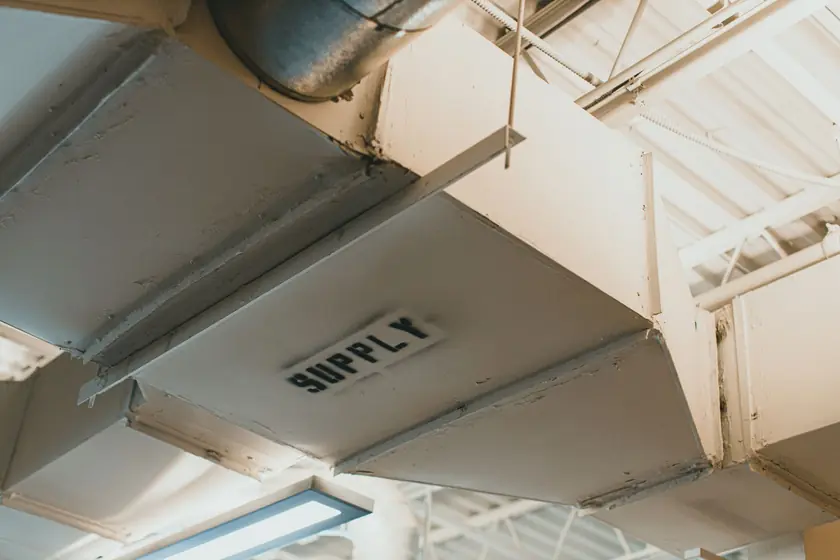
AC Repair in Cedar Park, TX: Costs, Causes and Answers to 90+ Homeowner Questions
A complete guide for Cedar Park homeowners: why your AC is not cooling, what repairs cost in 2026, when to replace, how to hire a licensed contractor and how to stay safe in the heat.
By: Cedar Park AC Repair team · Updated: 14 October 2026 · Read: 24 min
AC problems: why your air conditioner is not working
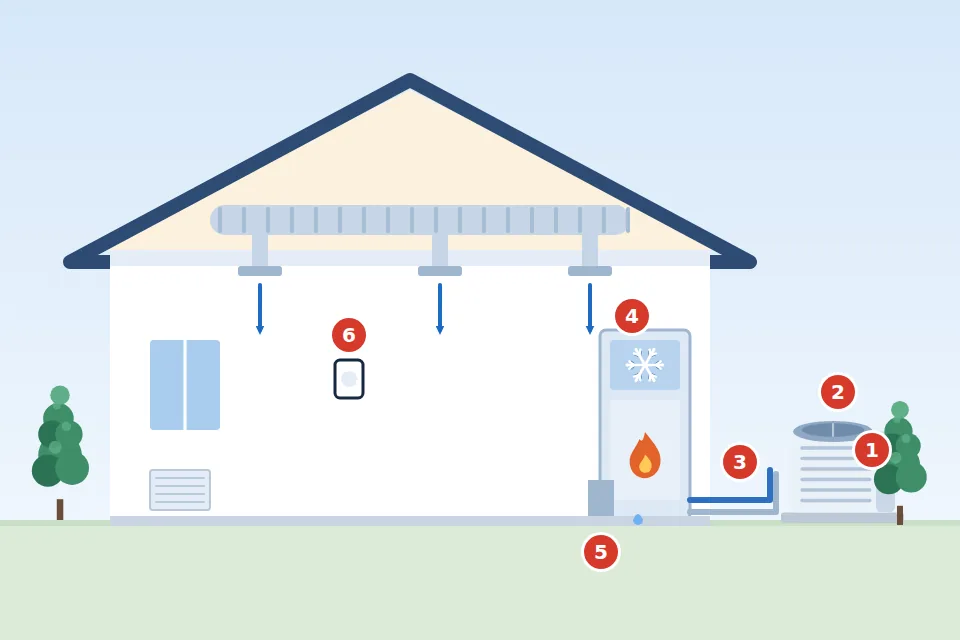
Most AC failures in Cedar Park trace back to four things: airflow, electrical parts, refrigerant and drainage. Each answer below starts with the likely cause, then tells you what to check and when to call a technician.
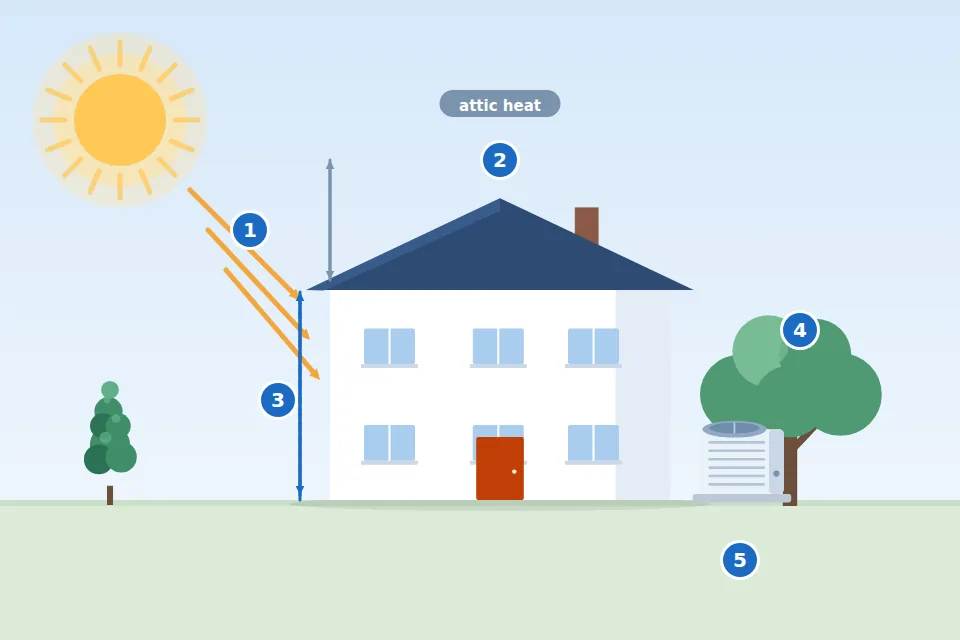
Where air conditioner faults usually start in a house.
Why is my AC running but not cooling?
The most common causes are a dirty air filter, a dirty outdoor coil, a failed capacitor or fan motor, low refrigerant from a leak, or a frozen indoor coil. Check the filter and the thermostat first. As a rule of thumb, air from the vents should be about 15 to 20 degrees cooler than the air returning to the unit. If it is not, the system needs a technician.
Why is my AC blowing warm air?
Warm air usually means the outdoor unit is not running, the compressor has stopped, refrigerant is low, or the thermostat is set to fan or heat. Confirm the thermostat is on cool and set below room temperature, that the outdoor unit is running and that the breaker has not tripped. Warm air from a running outdoor unit points to refrigerant or compressor trouble.
Why is my AC freezing up?
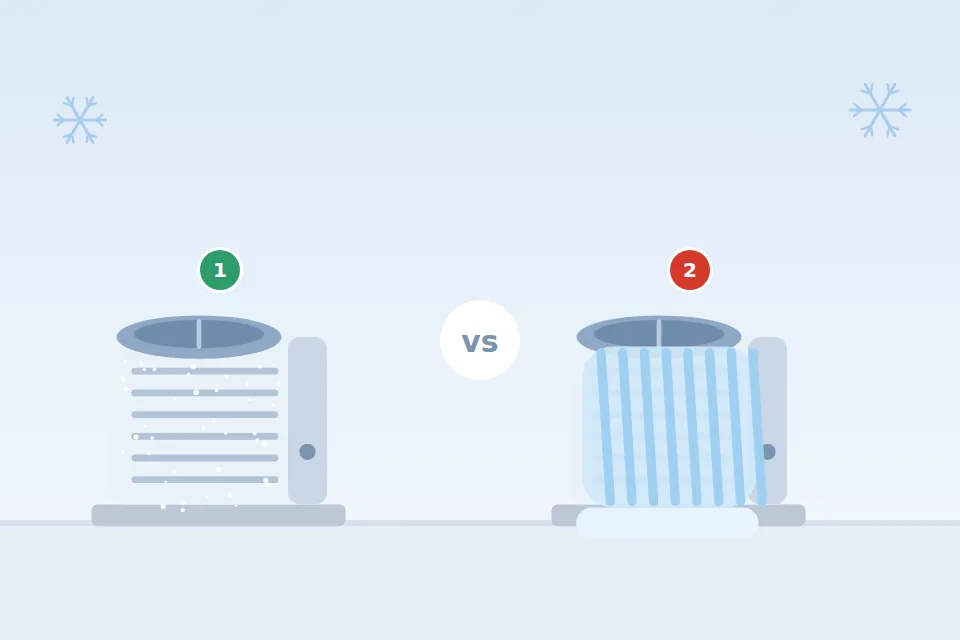
Ice on the indoor coil or the copper line means airflow is restricted or refrigerant is low. The usual triggers are a clogged filter, blocked return vents, a failing blower motor or a refrigerant leak. Turn the AC off, set the fan to on to thaw the coil, replace the filter and call if ice returns. Running a frozen system can damage the compressor.
Why is my AC leaking water?
A clogged condensate drain line is the most common cause. Algae and sludge block the line, the drain pan overflows and water drips from the indoor unit or ceiling. Other causes are a cracked drain pan, a frozen coil that melts, or a poorly sloped line. Turn the system off to stop the leak, then clear the line or call for service. Water dripping from the small PVC pipe outside the house is normal.
Why does my AC turn on and off every few minutes?
Short cycling is usually caused by an oversized unit, a dirty filter or coil, low refrigerant, a faulty thermostat or a failing electrical part. It wastes power and wears out the compressor. Replace the filter first. If the AC still cycles every few minutes, call a technician.
Why will my AC not turn on at all?
Check the thermostat batteries and mode, the breaker, the outdoor disconnect box, and the float switch in the indoor drain pan, which shuts the system off when the pan is full. If power and settings are correct and nothing happens, a failed control board, transformer or capacitor is likely.
Why does my AC keep tripping the breaker?
A breaker that trips repeatedly points to a short circuit, a failing compressor, a bad capacitor, a seized fan motor or loose wiring. Reset it once only. If it trips again, leave it off and call, because repeated resets can overheat wiring.
Why is the fan on my outdoor AC unit not spinning?
A stopped outdoor fan is often a failed capacitor or fan motor. If the unit hums but the fan does not turn, switch the system off at the thermostat and breaker. Never push the blades with a stick or your hand while the unit has power. A technician can usually replace a capacitor or motor in a single visit.
Why does my AC run all day?
In Cedar Park, an AC running most of the afternoon in July and August is normal, especially on 100 degree days. If it never reaches the set temperature, the cause may be low refrigerant, a dirty coil, leaky ducts, poor attic insulation or an undersized unit.
Why are some rooms hotter than others?
Uneven cooling comes from leaky or crushed ducts, closed or blocked vents, thin attic insulation, sun-heated west facing rooms or a heavy upstairs heat load. A technician can measure airflow at each vent, check the ducts for leaks and recommend balancing, sealing or zoning.
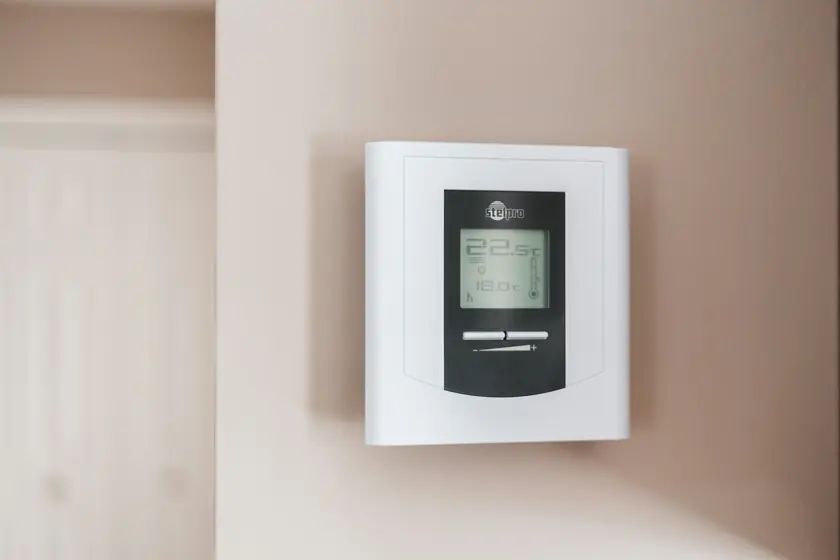
Why is my thermostat blank or not responding?
Replace the batteries first. Then check the breaker for the indoor unit, the access panel on the air handler, and the fuse on the control board. A dead thermostat that has fresh batteries often means a failed low voltage transformer, which a technician can replace.
What do different AC noises mean?
Squealing, grinding, banging and buzzing are warning noises: switch the system off and call. A soft hum and a click at startup are normal.
Noise
Likely cause
What to do
Squealing or screeching
Worn motor bearings or a slipping belt
Turn off, call
Grinding
Failing motor bearings or compressor
Turn off, call
Banging or clanking
Loose or broken part in the blower or compressor
Turn off, call
Buzzing
Failing capacitor or contactor, or debris in the fan
Turn off, call
Hissing
Refrigerant leak
Call
Gurgling
Drain line or refrigerant issue
Call
Rattling
Loose panel or debris
Check panels, then call
Single click at startup
Normal relay
None
Why does my AC smell bad?
The smell tells you the cause. Musty or dirty sock smells usually mean mold or bacteria on the coil or in the drain pan. A burning smell can be dust on a heating element or an overheating motor. A rotten egg smell is a natural gas warning.
Smell
Likely cause
What to do
Musty or dirty socks
Mold or bacteria on the coil or drain pan
Replace filter, book coil and drain cleaning
Burning dust
Dust on the heater, normal for a few minutes at first use
If it lasts, turn off and call
Hot electrical or burning plastic
Failing wiring, motor or capacitor
Turn off at the breaker, call
Rotten eggs or sulphur
Natural gas leak
Leave the house, call 911 and your gas utility
Dead animal
An animal in a duct or the unit
Call
Why is my electric bill so high when I run the AC?
A rising cooling bill without hotter weather usually means the system is working harder. Common causes are a dirty filter or coil, low refrigerant, leaky ducts, aging equipment and a failing part. Compare bills with the same weather, check the filter and book a tune up.
How do I know if my AC compressor is bad?
Signs include an outdoor unit that hums but does not start, warm air while the fan runs, a tripping breaker, loud banging or grinding, and a unit that shuts off soon after starting. A technician confirms it with electrical and pressure tests. On an older unit, a failed compressor often makes replacement the better choice.
How do I know if my AC is low on refrigerant?
Warm or weak cooling, ice on the line or coil, a hissing sound, rising bills and long run times all point to low refrigerant. An AC system is sealed, so low refrigerant means a leak. Topping up without repairing the leak is a short term patch.
What is the most common AC repair?
The most common repairs are replacing a failed capacitor or contactor, clearing a clogged condensate drain, repairing refrigerant leaks and replacing fan or blower motors. Heat and long run times make electrical parts fail most often in Texas summers.
A normal outdoor unit next to one with ice on the coil.
AC still not cooling?
Describe what the system is doing and ask for the first available visit.
A few safe checks fix a surprising number of calls, and they give the technician better information if you do need a visit.
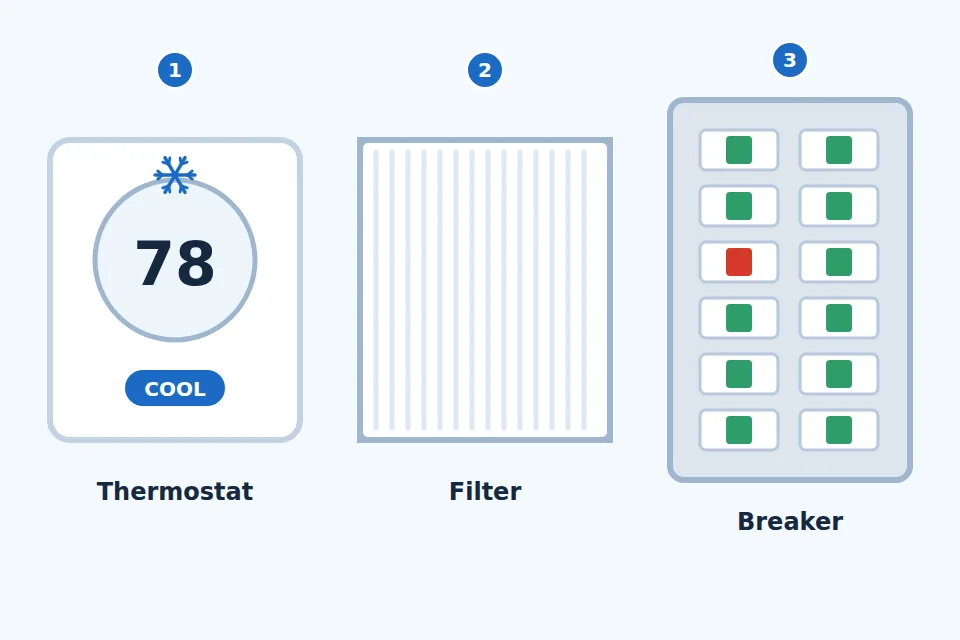
The three quickest checks: thermostat, filter and breaker.
What can I check myself before calling an AC repair company?
Check these in order: the thermostat is set to cool and below room temperature, the air filter is clean, the breaker and outdoor disconnect are on, the vents are open, there is two feet of clear space around the outdoor unit, and there is no ice on the indoor coil or line. If none of these helps, call.
How do I reset my air conditioner?
Set the thermostat to off, switch the AC breaker off for about five minutes, then switch it back on and set the thermostat to cool. The wait protects the compressor. Do this once only. If the system trips or stops again, there is a fault that needs a technician.
How do I change an AC filter?
Switch the system off, find the filter slot at the return grille or air handler, and slide the old filter out. Note the size printed on the frame and the arrow that shows airflow direction. Insert the new filter with the arrow pointing toward the blower, then switch the system back on.
How do I clear a clogged AC drain line?
Switch the system off. Find the PVC drain line near the indoor unit and the open end outside. Use a wet and dry vacuum on the outside end for about a minute to pull out the clog, then pour a cup of white vinegar into the access port at the indoor unit to slow algae. If water still backs up, call for service.
Is it safe to clean the outdoor AC unit myself?
Yes, if you switch the power off at the disconnect first. Remove leaves and debris, then rinse the coil gently with a garden hose. Avoid pressure washers, because they bend the thin fins and cut airflow. Do not open the unit or touch electrical parts.
Can I add refrigerant to my AC myself?
No. Federal rules under EPA Section 608 require certification to buy and handle most refrigerants, and overcharging damages the compressor. A low charge means a leak, which has to be found and repaired. Topping up alone only delays the next failure.
When should I not try to fix my AC myself?
Do not work on refrigerant lines, capacitors, wiring, gas lines or anything inside the sealed cabinets. Capacitors can hold a shock even with the power off. Call a licensed technician for these repairs, and for any burning smell, repeated breaker trips or gas smell.
Stay safe: never open the outdoor unit or touch capacitors. Switch the power off at the disconnect before you clean.
Section 3 of 10
AC repair and replacement costs in Cedar Park
The prices below are typical ranges for Texas homes. They are estimates, not quotes. The only price that matters is the one a technician gives you in writing after looking at your system.
$150 to $650Typical AC repair
$90 to $200Cooling tune up
$5,500 to $14,000New central AC installed
$300 to $800Duct cleaning
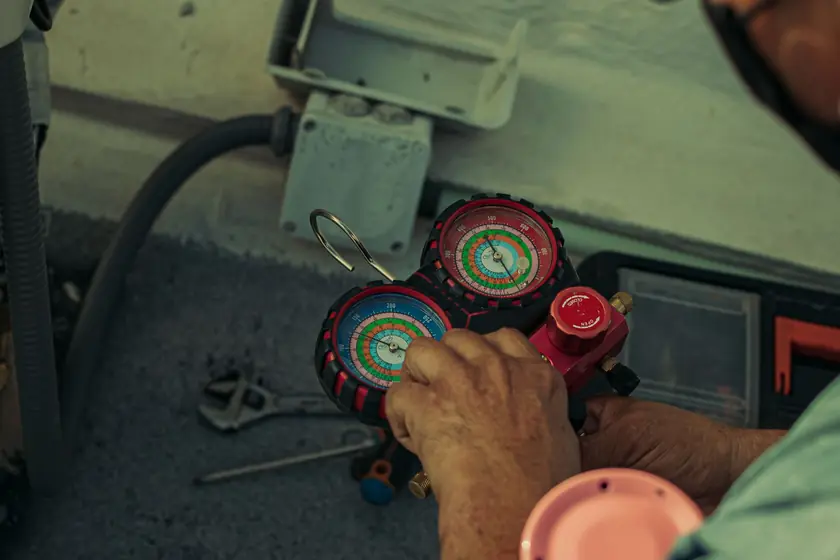
A technician reading refrigerant gauges during a repair.
How much does AC repair cost in Cedar Park?
Most AC repairs cost between about $150 and $650. Small fixes such as a capacitor or a clogged drain sit at the low end, while motors, coils and refrigerant leak repairs cost more. Compressor and coil replacement can reach $1,500 to $3,500 or more.
Repair
Typical range
Clear a clogged condensate drain
$100 to $300
Replace a capacitor
$150 to $400
Replace a contactor
$150 to $350
Replace a fan motor
$400 to $900
Find and repair a refrigerant leak
$300 to $1,500 or more
Replace an evaporator coil
$1,200 to $2,800
Replace a compressor
$1,500 to $3,500
Replace a thermostat
$150 to $400
Why is AC repair more expensive in summer?
Demand peaks when temperatures pass 95 degrees, so appointments fill quickly and after hours calls cost more at many companies. Parts can also run short in a heatwave. Booking a spring tune up avoids most of the rush and often catches the failing part before it breaks.
How much does an AC tune up cost?
A cooling tune up typically costs $90 to $200, and many companies offer a yearly plan. A good visit includes cleaning, electrical tests and a refrigerant check, not just a quick look. See our AC maintenance guide for what a tune up covers.
How much does it cost to fix a refrigerant leak or recharge an AC?
A recharge alone often runs $200 to $600 depending on the refrigerant, but a leak repair adds $300 to $1,500 or more. Older R-22 refrigerant costs much more per pound because it is no longer made. Always ask the technician to find the leak, not just add refrigerant.
How much does a new AC cost in Cedar Park?
A central AC replacement usually costs about $5,500 to $14,000 installed. Size, efficiency rating, brand, ductwork changes and the indoor coil all move the price. A 2 to 3 ton single stage system sits near the lower end, while a 4 to 5 ton variable speed system sits near the top. Our replacement guide explains what a good quote includes.
How much does duct cleaning cost?
Duct cleaning usually costs $300 to $800 for an average home, depending on the number of vents and the system size. Dryer vent cleaning is often priced separately. See the duct cleaning guide before you book.
What should a good AC repair quote include?
A good quote names the problem found, the part or work needed, the total price, the labour warranty and the part warranty. It should also say whether any visit fee is credited toward the repair. Do not approve work without a price in writing.
Is a free AC quote really free?
It can be. Ask before the visit whether the quote is free, whether there is a diagnostic or visit fee, and whether that fee comes off the repair price. A company that answers all three on the phone is easier to trust than one that does not.
How do I avoid AC repair scams?
Be cautious of very low advertised prices, pressure to replace the whole system on the first visit, refusal to show a license number, and upfront cash demands for large jobs. Get a second quote for any repair above $1,000 and ask the technician to show you the failed part.
Does homeowners insurance cover AC repair?
Standard homeowners insurance usually covers sudden damage from covered events such as hail or lightning, but not wear and tear or lack of maintenance. Check your policy and deductible, and photograph any storm damage before repairs.
Are there rebates for a new AC in Texas?
Utility rebates and manufacturer promotions change often, so ask your electricity provider and your installer what is available. Federal tax credit rules for efficient equipment have changed in recent years, so confirm the current rules at energystar.gov or with a tax professional before you buy.
Want the price in writing first?
Ask for a free quote. You hear the price before any work starts.
A repair makes sense when the system is young and the fix is small. Replacement makes sense when the unit is old, the repair is large or the system keeps failing.
Repair when
The unit is under 10 years old
The repair is a small part, such as a capacitor
The unit uses current refrigerant
Repairs have been rare
Replace when
The unit is over 12 to 15 years old
The repair costs thousands
It uses R-22 refrigerant
Breakdowns keep coming back
Right sizing depends on sun, attic heat and airflow, not floor area alone.
When should I replace my AC instead of repairing it?
Replace when the unit is over 12 to 15 years old and the repair is large, when it uses R-22 refrigerant, when repairs keep recurring, or when your bills keep rising. Get a replacement quote alongside any repair quote above $1,500.
What is the $5,000 rule for AC repair?
Multiply the age of the unit in years by the repair cost. If the result is over $5,000, replacement is usually the better value. A 12 year old unit with a $500 repair scores $6,000, so ask for a replacement quote as well. It is a guide, not a law.
How long does an AC last in Texas?
The U.S. Department of Energy cites about 15 to 20 years for a well maintained central AC. In Texas heat, with long run times, 10 to 15 years is more realistic. Yearly maintenance, a clean filter and clear airflow all add years.
Is it worth repairing a 15 year old AC?
Only for a small, inexpensive repair. At 15 years the compressor, coil and motors are all near the end of their life, and a major repair rarely pays back. Ask for both prices and compare the repair cost with the cost of a more efficient new system.
What is SEER2 and what do I need in Texas?
SEER2 measures how efficiently an AC cools over a season, and a higher number means lower running costs. Texas falls in the Southern region, where new split system air conditioners under 45,000 BTU must meet at least 14.3 SEER2. Many installers recommend 15 to 17 SEER2 for the long Cedar Park cooling season.
What size AC do I need for my house?
Size depends on the house, not just its floor area. As a starting point, many Texas homes need about one ton per 500 to 600 square feet, so a 2,000 square foot home often needs 3 to 4 tons. Only a load calculation, called ACCA Manual J, gives the right size.
Why does AC size matter?
An oversized AC cools quickly, shuts off early and leaves the air damp and clammy. An undersized AC runs constantly and never catches up on hot afternoons. Both wear out the equipment sooner than a correctly sized system.
What refrigerant will my new AC use?
Systems from about 2010 to 2024 mostly use R-410A. R-22 production ended on January 1, 2020, so repairing an R-22 system is expensive. New systems made from 2025 use lower impact refrigerants such as R-454B or R-32, which are safe when installed by trained technicians.
How long does AC installation take?
A straightforward swap of the outdoor unit and indoor coil usually takes one day. A new furnace or air handler, new ducts or electrical upgrades add time. Ask the installer for a start and finish time before the job begins.
Do I need a permit to replace my AC?
Many Texas cities require a mechanical permit for AC replacement. Ask your installer to confirm the current requirements with the City of Cedar Park and to say who pulls the permit. A licensed contractor normally handles it.
Should I replace the indoor and outdoor units together?
Usually yes. A matched outdoor unit and indoor coil deliver the rated efficiency and keep the manufacturer warranty valid. A mismatched pair can run less efficiently and may fail sooner.
Is a variable speed AC worth it in Cedar Park?
Often yes for larger or longer lived homes. Two stage and variable speed systems run longer at lower speed, which improves comfort and humidity control and can reduce energy use. They cost more upfront, so compare the quote with the energy savings you can expect.
The data plate on the outdoor unit shows the brand, model and serial number.
Tip: photograph the data plate before you call. It tells the technician the age and refrigerant at once.
Section 5 of 10
Choosing an AC company in Cedar Park
A good company is licensed, gives prices in writing, answers questions plainly and stands behind its work. These answers show you how to check.
How a service call works: request, call, visit and fix.
How do I choose the best AC repair company in Cedar Park?
Pick a company with a Texas license, clear written pricing, a labour warranty, reviews you can verify and a physical address. Call two or three and compare how they answer. A good company explains the price, the visit fee and the timing on the phone.
Does an AC contractor need a license in Texas?
Yes. Texas requires air conditioning and refrigeration contractors to hold a license from the Texas Department of Licensing and Regulation (TDLR). The license number should appear on advertising and contracts. Class A licences cover any system size, and Class B licences cover systems up to 25 tons of cooling.
How do I check an AC contractor license in Texas?
Ask for the license number, then look it up on the TDLR website at tdlr.texas.gov. The lookup shows whether the license is active and whether the contractor has any actions against it.
What questions should I ask before hiring an AC company?
Ask: Are you licensed and insured? Is there a visit fee, and does it come off the repair? Is the quote in writing? What is the labour warranty? Who will do the work? How soon can you come? Honest answers to these questions screen out most problem companies.
What are red flags when hiring an AC company?
Red flags include no license number, a very low advertised price, pressure to decide today, a replacement quote over the phone without seeing the house, a demand for full payment upfront, and a technician who will not show you the failed part.
Do you offer 24 hour AC repair in Cedar Park?
Yes. Cedar Park AC Repair is open 24 hours a day, 7 days a week at (512) 877-2409. Ask for the first available visit and describe what the system is doing. Timing depends on the hour, the weather and how many calls are open.
What should I expect during an AC repair visit?
The technician checks the thermostat, filter, airflow, electrical parts and refrigerant, then explains the fault and gives a written price before starting. If they find something new, they should explain it and give a new price before doing any extra work.
What warranty should I get on an AC repair?
Ask for a written labour warranty, commonly 30 to 90 days or longer on repairs, plus the manufacturer part warranty. Many manufacturers cover parts for 5 to 10 years on a new unit if it was registered. Keep the paperwork.
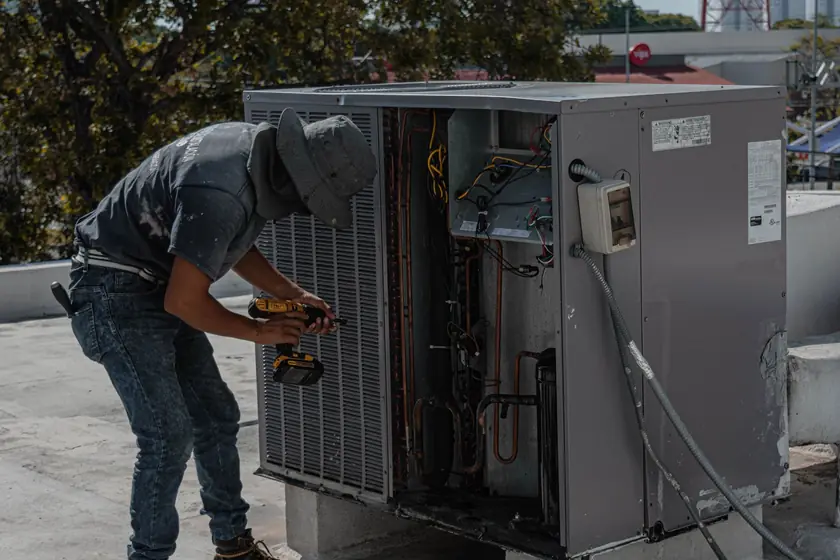
A technician servicing an outdoor condenser unit.
Open 24 hours, 7 days a week
Call for the first available visit. Free quotes, price before work starts.
A failed AC in a Texas summer is a safety issue, not just a comfort issue. These answers cover what to do in the first hour.
Emergency: heat stroke is a medical emergency. If someone is confused, faint or has hot dry skin, call 911 first.
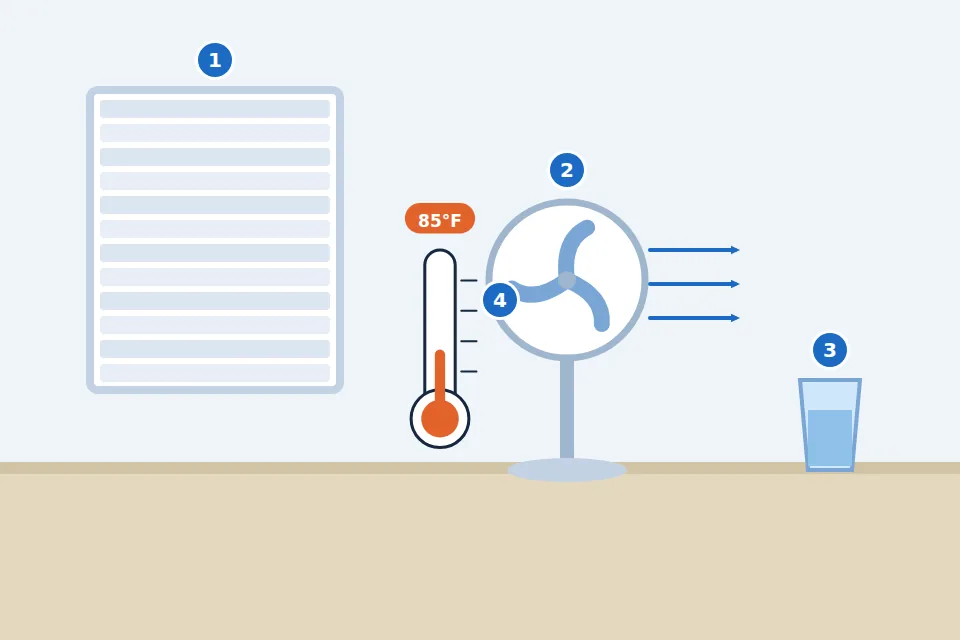
Cool one room with a fan, shade and water while you wait for the repair.
What should I do if my AC stops working during a heatwave?
Switch the thermostat and breaker to check for a simple cause, then call for service and say if anyone at home is at risk from the heat. While you wait, close blinds on the sunny side, run fans, drink water, and move to the coolest room or a cooler place. Our emergency steps have the full list.
How hot is too hot inside a house?
Indoor temperatures above about 90 degrees can be dangerous, especially for babies, older adults, pregnant people, people with health conditions and pets. If the house is climbing past 85 and the AC cannot be fixed quickly, plan to move vulnerable people somewhere cooler.
How can I keep my house cool without AC?
Close blinds and curtains on sun facing windows, run ceiling and box fans, avoid using the oven, take cool showers, and open windows only when the outdoor air is cooler than the indoor air. Fans cool people, not rooms, so turn them off when you leave.
What are the signs of heat exhaustion and heat stroke?
Heat exhaustion causes heavy sweating, cold clammy skin, a fast weak pulse, nausea, cramps, dizziness and headache. Heat stroke is an emergency: body temperature of 103 degrees or higher, hot dry or damp skin, confusion, fainting or a fast strong pulse. Call 911 for suspected heat stroke.
Is it safe to run my AC if it is frozen or leaking?
No. Turn it off. Running a frozen system can damage the compressor, and a leaking drain can damage ceilings and floors. Set the fan to on to thaw a frozen coil, mop up any water and call for service.
What should I do if I smell gas near my furnace or AC?
Leave the house at once, leave the door open, do not touch light switches or phones inside, and call 911 and your gas utility from outside. A rotten egg smell means a possible natural gas leak.
My AC stopped working at night. Can it wait until morning?
Not always. If the house is above about 85 degrees or anyone is vulnerable to heat, call at once. Cedar Park AC Repair answers 24 hours a day at (512) 877-2409, and you can ask for the first available visit.
Indoor temperatures above about 90 degrees can be dangerous.
Section 7 of 10
Maintenance and lower energy bills
Most breakdowns are preventable. A few cheap habits keep an AC running through a Cedar Park summer.
What a tune up checks on the outdoor unit.
How often should I service my AC?
Service the cooling system once a year, ideally in spring before the first 90 degree days, and check the heating system in fall. Systems that run hard, such as in large homes or rentals, can benefit from a second visit mid season.
What does an AC tune up include?
A proper tune up cleans the coils, checks refrigerant, tests the capacitor and contactor, tightens electrical connections, clears the drain, tests the thermostat, measures airflow and temperature drop, and replaces the filter. A visit that skips these steps is not a full tune up.
How often should I change my AC filter?
Change a 1 inch filter every 1 to 3 months, and every month during cedar season, with pets or after new construction nearby. Thicker 4 to 5 inch media filters last 6 to 12 months. A clogged filter is the single most common cause of AC trouble.
What filter rating do I need?
Most homes do well with a MERV 8 to 11 filter. MERV 13 filters catch finer particles but can restrict airflow in systems that were not built for them, so ask your technician before switching.
What is the best thermostat setting in a Texas summer?
The U.S. Department of Energy suggests 78 degrees when you are home and need cooling. Raise it by 4 to 8 degrees when you are away. Avoid big swings, because a hot house takes a long time to cool on a 100 degree day.
Should I turn my AC off when I leave the house?
No. In a Cedar Park summer, switching the AC off lets heat and humidity build up, and the system works hard to recover. Raise the setting to about 82 to 85 degrees instead.
How can I lower my AC bill in Cedar Park?
Change the filter, schedule a tune up, seal duct leaks, add attic insulation, shade west windows, use ceiling fans and set the thermostat to 78 degrees. Duct sealing and attic insulation often save the most in older homes.
Does closing vents in unused rooms save energy?
Usually not. Closing vents raises pressure in the ducts, which can increase leaks and strain the blower. Keep vents open and fix uneven cooling at the source instead.
Do ceiling fans help my AC?
Yes, they make the room feel about 4 degrees cooler, so you can raise the thermostat. In summer, run fans counterclockwise as seen from below, and turn them off when you leave because they cool people, not rooms.
How much space does the outdoor unit need?
Keep about two feet clear on all sides and five feet above. Trim plants, remove leaves and make sure the pad is level. A crowded or tilted unit runs hotter and wears out sooner.
Should I cover my outdoor AC unit in winter?
No. A tight cover traps moisture and gives rodents a place to nest. If you want protection, use a loose top cover only, or simply keep the area clear of debris.
How do I protect my AC from hail and storms?
Install a surge protector at the outdoor unit, consider a coil guard for hail prone areas, and do not cover the unit during a storm. After hail, check the fins and call a technician if they are dented, because crushed fins cut airflow.
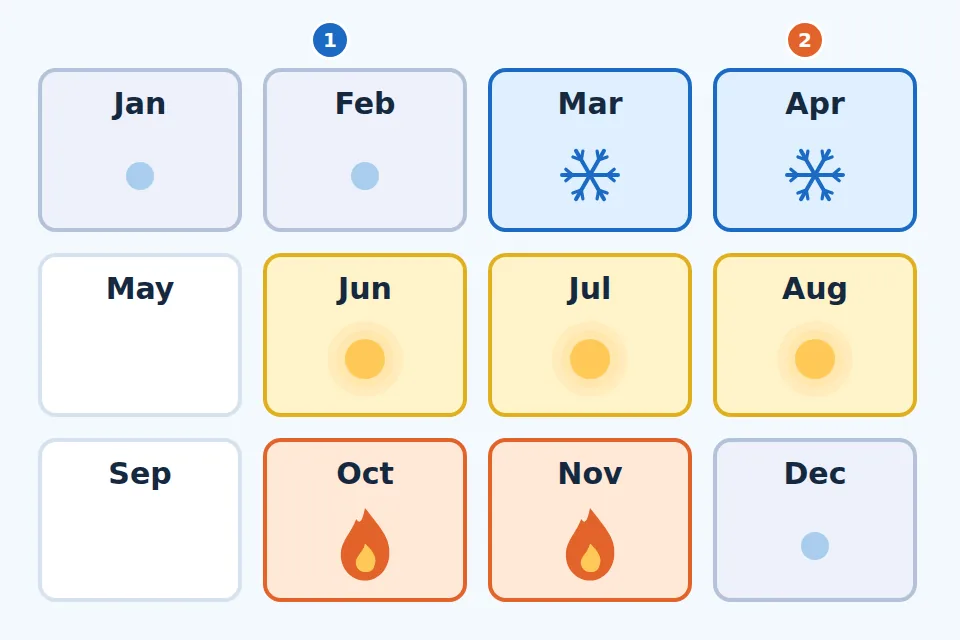
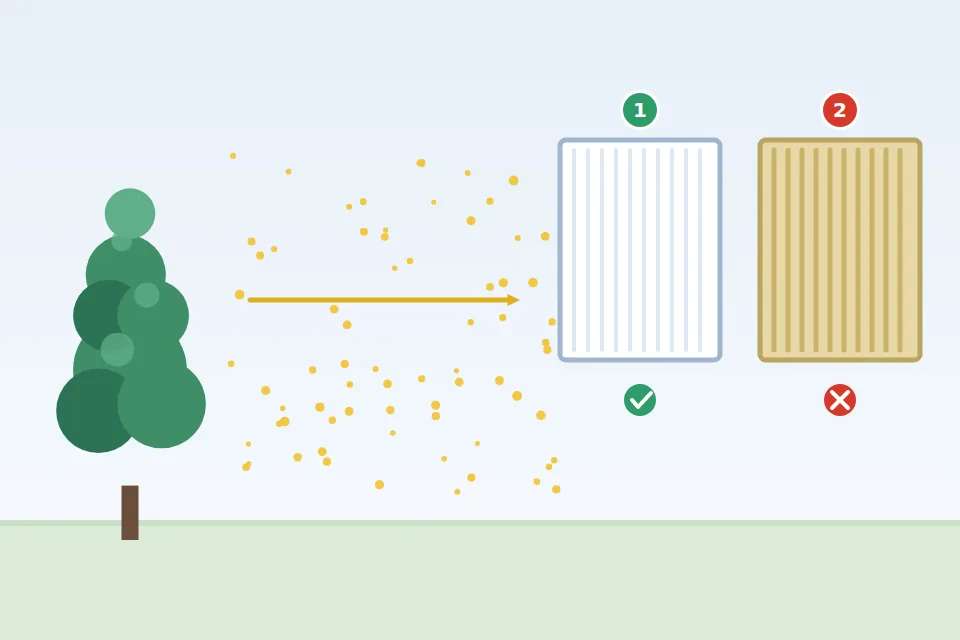
Cooling and heating checks across the year.Cedar pollen clogs filters fast from December to February.
Section 8 of 10
AC service in Cedar Park, TX
Cedar Park sits in Williamson County, north of Austin, and its climate and growth shape how air conditioners fail.
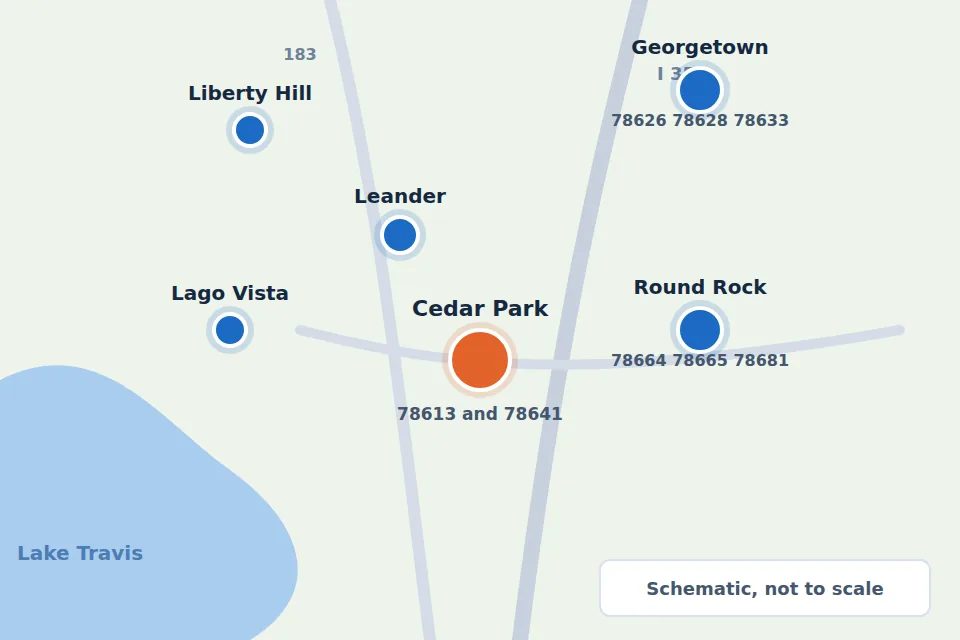
Cedar Park and the nearby towns we serve. Schematic, not to scale.
What makes AC repair in Cedar Park different?
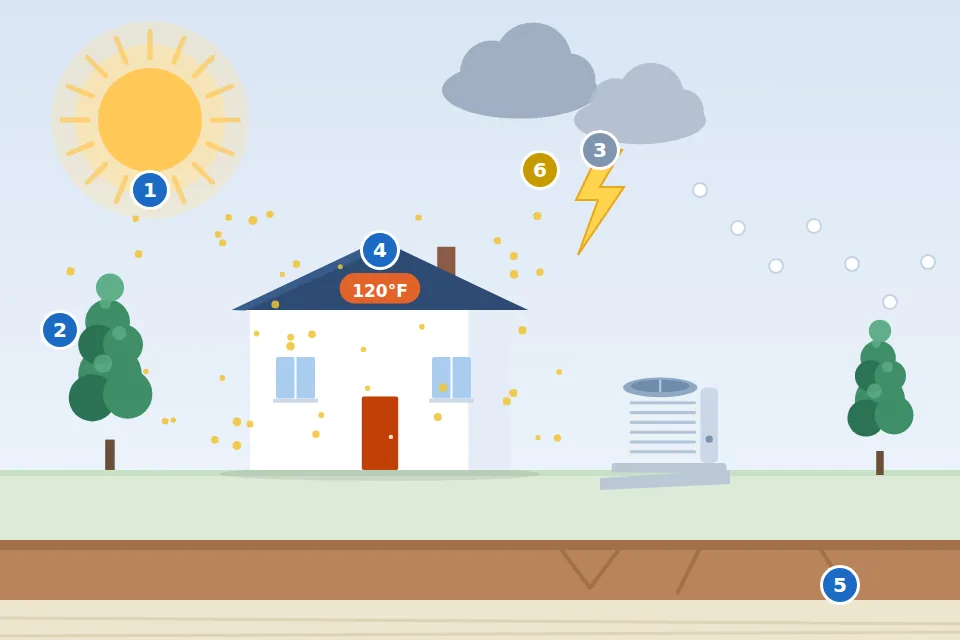
Cedar Park has long, hot summers, a heavy mountain cedar pollen season in winter, spring hail, and a mix of older homes and fast growing new subdivisions. These push air conditioners to run long hours, clog filters and wear out electrical parts earlier than in milder places.
When is AC season in Cedar Park?
Most homes run the AC from April through October, with the heaviest load in July and August when highs reach the mid 90s and 100 degree days are common. Service in spring prepares the system for that load.
Does cedar pollen affect my AC?
Yes. From December to February mountain cedar pollen fills filters fast, and a clogged filter can stop a heater or AC mid cycle. Check the filter monthly through the winter, and read about yearly service visits for what a tune up covers.
Does hail damage AC units in Cedar Park?
It can. Spring hail dents the thin fins on the outdoor coil, which cuts airflow and strains the compressor. A technician can straighten fins or replace a coil, and your home insurance may cover storm damage.
Do HOA rules affect where my AC unit goes?
Many Cedar Park neighbourhoods have HOAs that set rules for where the outdoor unit sits and how it is screened. Check your rules before you sign a replacement quote, so the new unit goes where it is allowed.
Which ZIP codes in Cedar Park do you cover?
Cedar Park AC Repair covers Cedar Park ZIP codes 78613 and 78641. We are at 2021 N Bell Blvd, B1 A, Cedar Park, TX 78613. Call first if you plan to stop by.
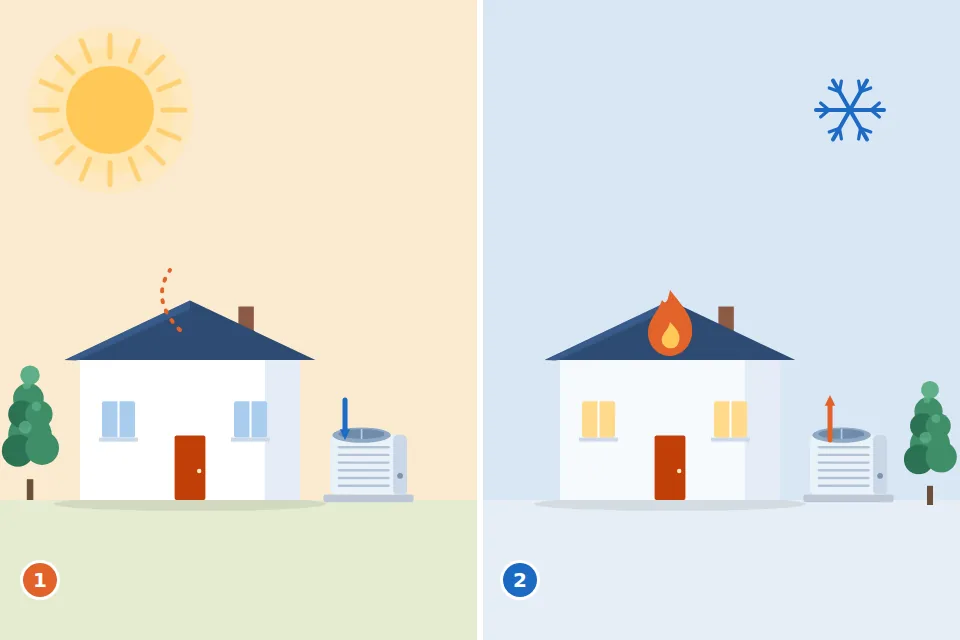
Hot summers and cold snaps both stress a system.Heat, storms and surges wear on outdoor units.
Section 9 of 10
Heating and heat pumps in Central Texas
Winters are mild, but cold snaps happen, and a heating system that fails on a freezing night is as urgent as a failed AC in July.
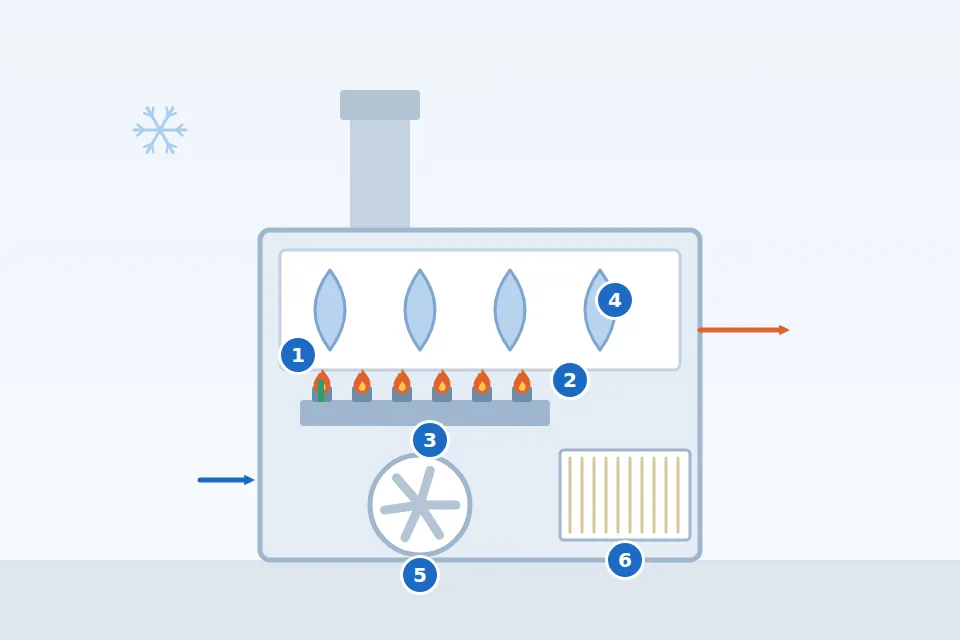
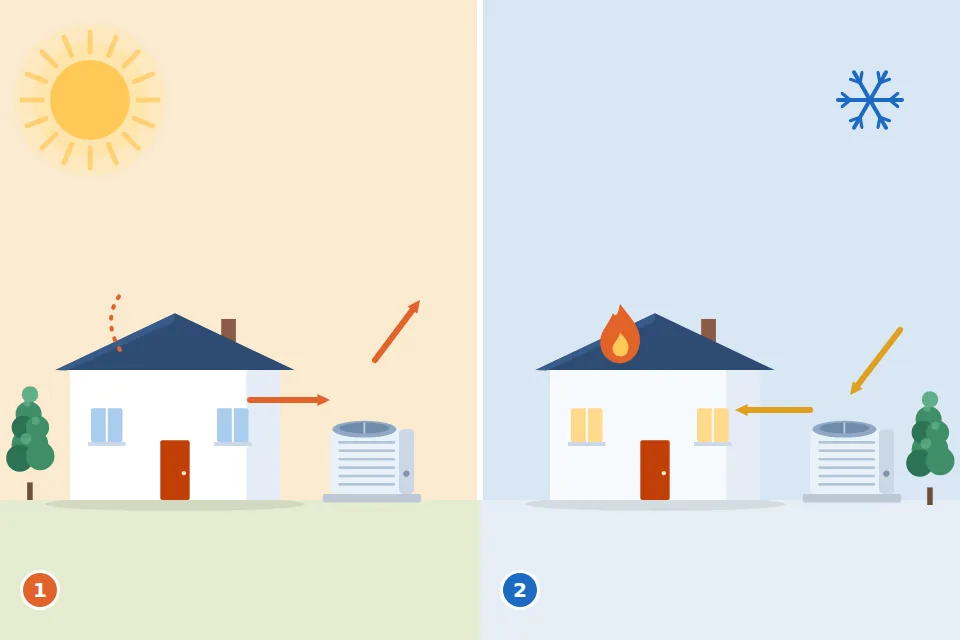
How a gas furnace makes and moves heat.A heat pump cools in summer and heats in winter.
Do I really need a heating system in Cedar Park?
Yes. Winter nights drop below freezing several times a year, and cold snaps can last days. A working furnace or heat pump protects your family and your pipes.
Is a heat pump or an AC with a furnace better in Texas?
Both work. A heat pump heats and cools with one system and is very efficient in Central Texas winters. An AC with a gas furnace can cost less to heat if gas is cheaper than electricity. Our heat pump guide compares the two.
Why is my furnace not heating?
Common causes are a dirty filter, thermostat settings, a failed igniter or flame sensor, a tripped limit switch or a gas supply problem. Check the filter and thermostat first, then see the furnace guide or call.
What are heat strips and why is my winter electric bill high?
Heat strips are electric coils that give a heat pump extra warmth on very cold days. They use a lot of electricity, so frequent use drives bills up. A technician can check whether the heat pump itself is working as it should.
Is it normal for a furnace to smell the first time I use it in fall?
A brief burning dust smell for a few minutes is normal. If it lasts, smells like gas, or comes with smoke, turn the system off and call.
How often should a furnace be serviced?
Once a year, in fall before the cold arrives. A service visit checks the burner, heat exchanger, flame sensor and venting, and catches problems before the first cold snap.
Do I need carbon monoxide detectors?
Yes, if you have gas appliances or an attached garage. Put detectors on every level and near sleeping areas, test them monthly and replace them as the maker advises.
A working thermostat is the first thing to check.
Section 10 of 10
Air quality, ducts and humidity
Your ducts and filter decide what you breathe, and they decide how well cool air reaches each room.
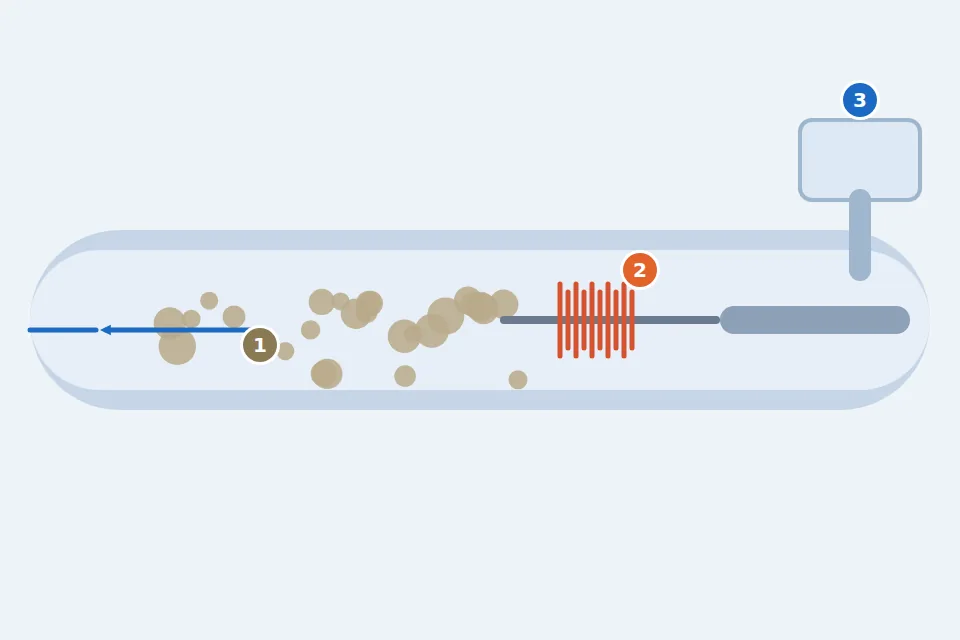
Dust and debris can build up inside ducts.
Do I need duct cleaning?
Not routinely. The EPA has found no proof that routine duct cleaning prevents illness. It makes sense after a renovation, a pest problem, visible mold or heavy dust blowing from the vents. See the duct cleaning guide.
How can I tell if my ducts are leaking?
Signs include rooms that never cool, high bills, dusty air, hot attic ducts and visible gaps or torn tape. A duct test measures how much cool air escapes before it reaches the rooms.
What humidity should my home have?
Aim for 30 to 50 percent relative humidity, which is the range the EPA recommends. Higher humidity encourages mold and dust mites. A correctly sized AC removes moisture as it cools.
Do air purifiers and UV lights help?
A good filter catches the most particles. UV lights can reduce mold growth on the coil, and purifiers can help in sensitive households, but none replaces a clean filter and tight ducts.
Why is my house so dusty?
Common causes are leaky ducts, a dirty filter, a low rating filter and dust drawn in from the attic or garage. Seal the ducts, change the filter regularly and keep returns clear.
What causes a musty smell from the vents?
Mold or bacteria on the evaporator coil or in the drain pan. Replace the filter, clear the drain and book a coil cleaning. If the smell comes with visible mold, ask a professional to inspect.
Ducts in a hot attic can leak cooled air.
Glossary of AC terms
Plain English meanings for the terms you will hear on a service call.
SEER2
The seasonal efficiency rating for cooling. A higher number means lower running costs.
BTU
British thermal unit, the measure of heat an AC removes in an hour. One ton of cooling is 12,000 BTU per hour.
Ton
The size of an AC. A 3 ton system removes about 36,000 BTU of heat per hour.
Condenser
The outdoor unit that releases heat from the house. It holds the compressor and fan.
Evaporator coil
The indoor coil that absorbs heat and moisture from the air as it passes over it.
Compressor
The pump that moves refrigerant between the coils. It is the most expensive part of the system.
Capacitor
A part that gives the compressor and fan motors the jolt they need to start. It is the most common failed part.
Contactor
The electrical switch that turns the outdoor unit on and off.
Refrigerant
The fluid that carries heat out of the house. It is sealed in the system and does not get used up.
Air handler
The indoor unit that holds the blower and coil and pushes air through the ducts.
Condensate drain
The pipe that carries moisture removed from the air out of the house.
Heat strips
Electric heating elements that give a heat pump extra heat in cold weather.
Manual J
The industry load calculation, from ACCA, that sizes a heating and cooling system for a specific house.
MERV
A filter rating from 1 to 16 that shows how well the filter catches particles.
Short cycling
When the AC turns on and off in rapid cycles instead of running in long, steady ones.
Sources and how this guide was written
This guide was written by the team at Cedar Park AC Repair and answers the questions homeowners ask most about air conditioning, heating and air quality in Cedar Park, TX. Cost ranges are typical Texas estimates, not quotes, and prices change with the season and the parts used. Standards and rules were checked against the sources below on October 14, 2026.
Cedar Park AC Repair, 2021 N Bell Blvd, B1 A, Cedar Park, TX 78613. Open 24 hours a day, 7 days a week. Phone (512) 877-2409. Last updated October 14, 2026.
CP
Written by the Cedar Park AC Repair team.
We answer AC, heating and air quality calls across Cedar Park, Leander, Round Rock, Georgetown and Lago Vista, open 24 hours a day. Read about us or see how we can help. Cost ranges are estimates, not quotes.